
Suwannee County Wanted List Status
Does Suwannee County keep a named most-wanted roster? Nothing stable appears on the Sheriff's Office site, its sitemap, or its resource links. So there is no local count, update schedule, or photo policy to describe here. Be careful with anything else you find. A social media post or a third-party page is not the Sheriff's current list. Treating it as one spreads bad information.
What the county does offer is a Sheriff's Warrants page. It explains what the warrant division handles. It also gives you a direct way to confirm a warrant with staff. Read it as an informational resource, though. You cannot type in a name or browse photos. You also cannot assume someone faces arrest just because the division exists. Service, recall, court action, and data corrections all change a record. Only Records/Warrants staff can confirm current status.
The official page appears below. It documents the county's process without copying any lineup of people.
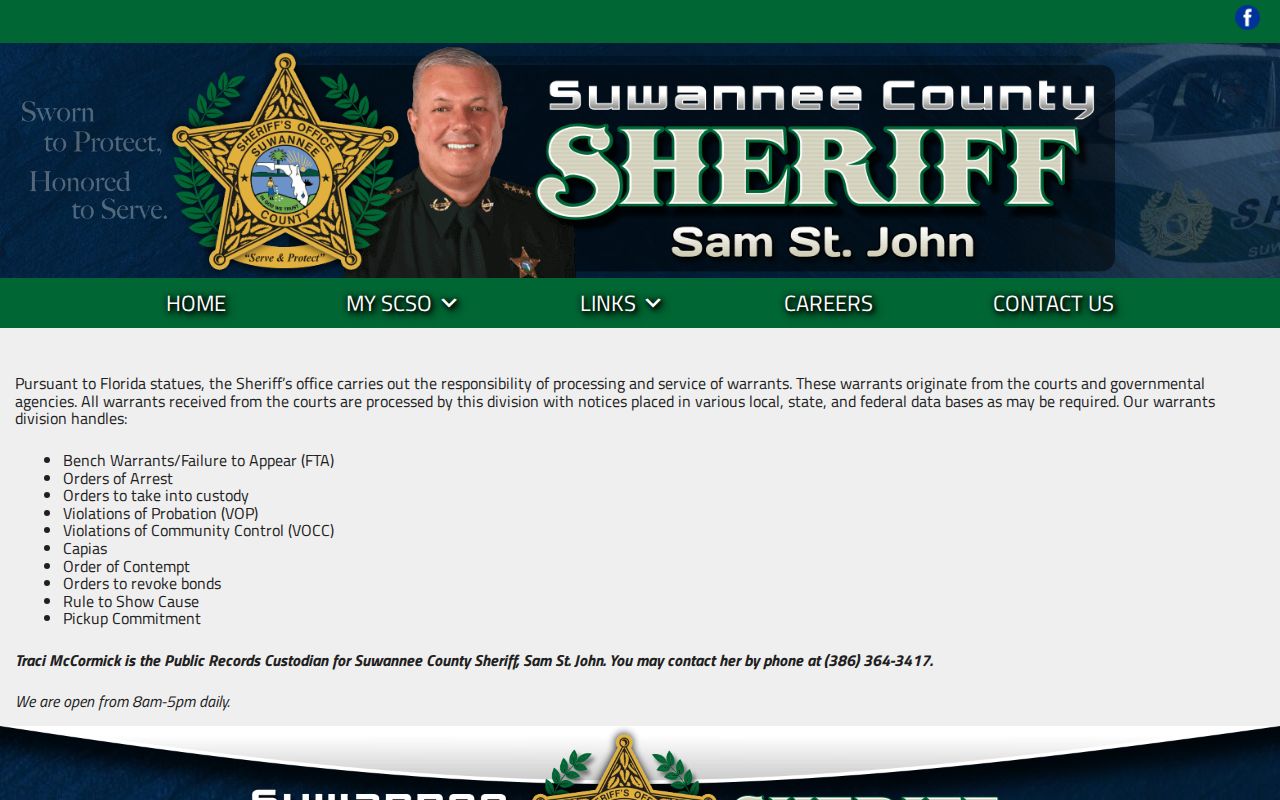
Its value is the agency contact and warrant-type explanation, not a photo-bearing local most-wanted feed.
Suwannee Wanted Source Fields
An honest "what the listing shows" table cannot exist for Suwannee County, because no verified local wanted list was found. A source-field table fills the gap instead. It maps what each official channel contributes and what it cannot establish. That distinction matters. It keeps a photograph or a docket note from being mistaken for live confirmation of an active warrant.
| Official source | What it can show |
|---|---|
| SCSO Warrants Division | Current county confirmation and the agency contact responsible for processing and service. |
| FDLE Wanted Persons | Statewide discovery fields and any information or image carried by the originating agency’s entry. |
| Suwannee Clerk docket | Filed case events, orders, hearings, and later outcome information where public. |
| SmartCOP after booking | Booking photo, identifiers, intake time, reported charges, bond, agency, and recorded custody status. |
Stay within each row's limits. The Clerk may keep a warrant-related filing long after its status changes. FDLE might surface an entry that still needs agency confirmation before it means anything. SmartCOP begins after a booking, so it is not a warrant search at all. For local confirmation, SCSO is the point of contact.
Check Suwannee County Warrants
No public portal exists for searching Suwannee County warrants by name. A careful check therefore splits the questions across sources. The Sheriff confirms active local warrants. FDLE handles statewide discovery. The Clerk preserves filed court events and later case activity. None of these can do another's job, so use each one for its own purpose.
- Start with the SCSO Warrants Division and call Records/Warrants at (386) 364-3417 during its published 8 a.m. to 5 p.m. hours. Give enough verified identifiers to avoid a mistaken match.
- Search the FDLE Wanted Persons system for statewide discovery. Treat any apparent match as a lead, then confirm it with the agency shown as the originator.
- Use the Clerk’s official Suwannee criminal case search to review court events tied to the case. A docket entry is not a real-time warrant status screen.
- If the question concerns the person named in the record, speak with a lawyer or the issuing court about a lawful response. Do not use online gaps or delays to guess when enforcement may occur.
FDLE Suwannee Wanted Discovery
The Sheriff points to FDLE as a backup discovery channel. FDLE Wanted Persons can surface records from agencies across Florida. It is not a Suwannee-only list, though, and it does not replace a phone call. Records can lag after a warrant is served, recalled, or corrected. Similar names sometimes produce a poor match.
The FDLE Wanted Persons search form is the official statewide interface.
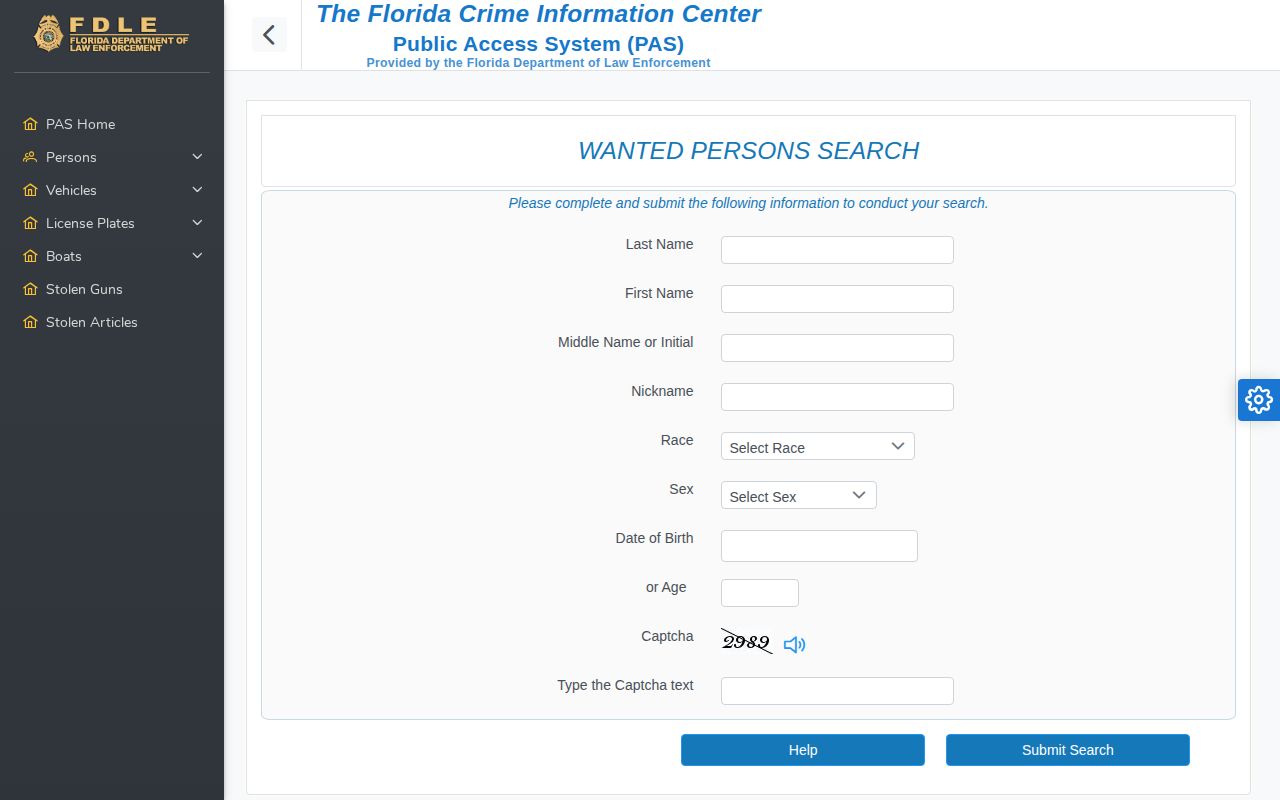
Pull the identifying details from any result, note the originating agency, and ask that agency to verify the warrant is still active.
Resist turning FDLE entries into a local gallery. The official source keeps the record and any photo attached to it, which prevents stale copies from circulating and keeps corrections tied to the agency file. It also guards against trusting appearance over hard identifiers. Names, birth details, and agency identifiers give a far better match than a face.
Note: An FDLE match is a discovery result, not a substitute for current confirmation by the agency that originated the warrant.
Suwannee County Warrant Types
The Sheriff's division handles more than one kind of court command. "Warrant" is a broad label. A bench warrant often follows a missed court date, while a capias is a court order directing that a person be taken into custody. Other orders grow out of custody, supervision, contempt, or bond proceedings. For the controlling terms, only the issuing record counts.
| Type handled by SCSO | What the label indicates |
|---|---|
| Bench warrant / failure to appear | A court-issued process commonly tied to a missed required appearance. |
| Order of arrest or capias | A judicial command directing arrest; the court file gives the case context. |
| Custody or pickup order | A direction to take a named person into custody under the terms of the order. |
| Probation or community-control violation | An charge that conditions of supervision were violated. |
| Contempt or rule to show cause | Court process tied to alleged noncompliance and a required judicial response. |
| Bond-revocation order | A court action affecting release conditions in an existing matter. |
The SCSO page also names commitments and other government-agency orders. Labels blur together in everyday speech. That is why staff confirmation and the underlying court document matter far more than a search snippet. One more caution applies. An empty FDLE result does not prove that no local process exists.
Note: Warrant labels describe legal process, and only the responsible agency can confirm whether that process remains active.
Suwannee Warrant and Court Records
The Suwannee County Clerk of the Circuit Court and Comptroller keeps the local court file. Inside it you may find a warrant-related event, a later return, a hearing, an order, or a disposition. That history explains how a case developed after the initial process. Just know the docket's limits. It is not a live "safe to arrest" screen. It is not a Sheriff warrant database either.
Suwannee County sits in Florida's Third Judicial Circuit. The Third Judicial Circuit Suwannee page offers court context. The Clerk remains the records custodian. Together they give useful orientation on how the court side works.
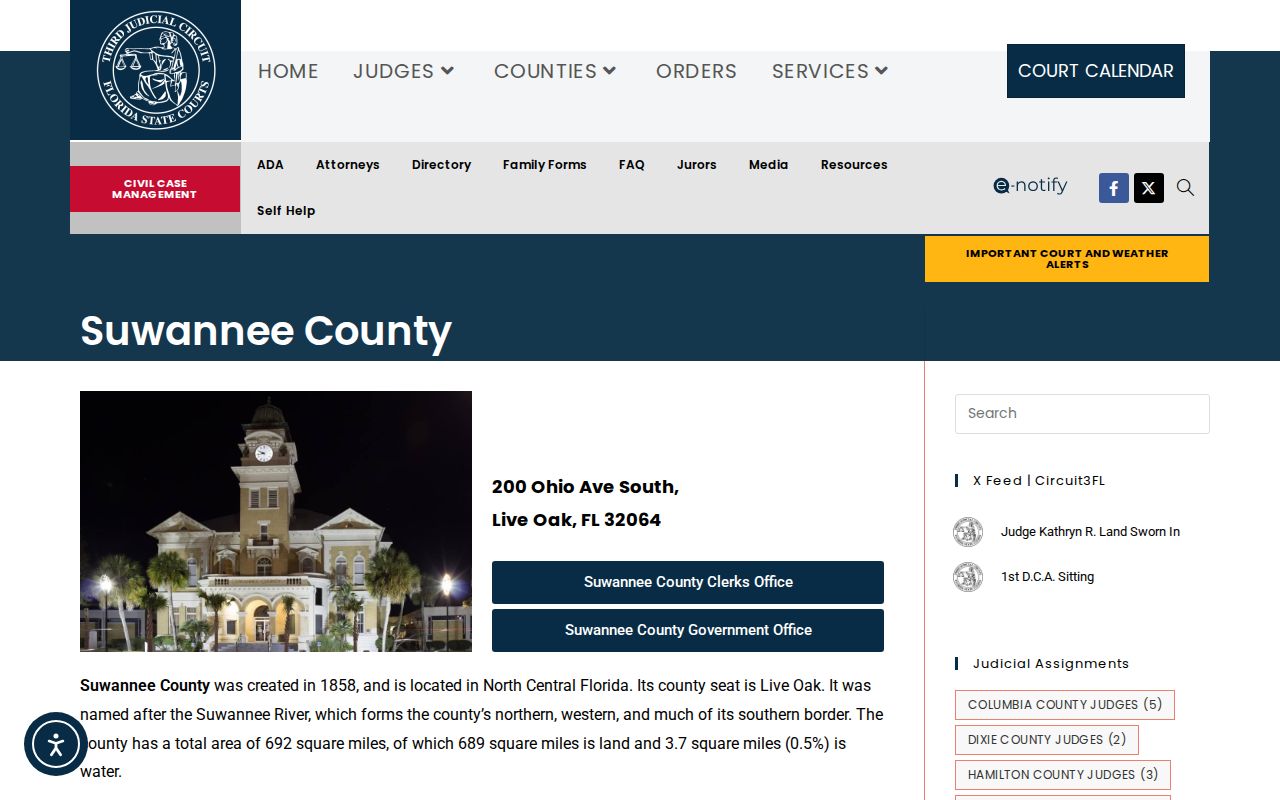
Jurisdiction matters here. Court records capture what happened before a judge. The SCSO handles current warrant details for Suwannee County. Both sources tell different parts of one story.
When you match a case, use the full name plus a case number and dates. A shared name alone leads to dead ends and mistaken identities. Sealed or confidential files stay out of public view. A missing document image does not mean an event never took place. For a certified copy, ask the Clerk of Court directly rather than trusting a screenshot.
Report Suwannee Wanted Information
The Sheriff's Office asks residents to report suspicious activity through non-emergency dispatch. Callers can leave their name and number, though that part is optional. Helpful, yes. It is not, however, a formal promise of anonymity. No Suwannee-specific Crime Stoppers reward page, cash reward policy, named tip form, or "Warrant Wednesday" schedule turned up anywhere.
Suwannee County Sheriff’s Office
200 Ohio Avenue South
Live Oak, FL 32064
Non-emergency dispatch: (386) 364-3785
Records/Warrants: (386) 364-3417
Emergency: 911
Stick to facts, not conclusions. Good tips name the official record you viewed, the agency listed there, and any current safety worry. Never post a home address, plan a confrontation, or recruit others to detain someone. That job belongs to law enforcement.
Note: Optional caller identification is not a promise of legal anonymity, and no verified local reward program was found.
Suwannee Wanted Capture Records
Once an arrest happens, the picture changes. A warrant reflects authority sought before the arrest. Booking records show what happened after. The Suwannee County Jail takes in people booked by county agencies. Its SmartCOP screen can display the booking photo, booking number, arresting agency, charges as entered, bond, and custody status.
For county-wide searching, the Suwannee County busted mugshots home page walks through the roster process. A captured person may show up in the last-24-hours feed. They might move to the current roster, then appear later under released records. To follow filed charges, hearings, and the final court outcome, the Clerk's case record is the source that matters.
Suwannee Warrant Apps and Alerts
Suwannee's Sheriff has no official mobile app. The agency points to SmartCOP instead. It runs fine in a mobile browser. One catch: SmartCOP searches jail bookings, not warrants. Be wary of generic app-store results promoted as SCSO products without direct agency endorsement. Treat unofficial push alerts and social accounts with the same caution.
The Sheriff also links VINELink for custody records and status notifications in participating agencies. VINE works only after someone is in custody. It will not confirm an unserved warrant, and alerts can lag or miss an event. When certainty matters, verify with the holding agency directly.
Social media accounts do post selected investigations, arrests, and appeals. There is no fixed "Warrant Wednesday" and no standing social wanted roster. No guaranteed posting rhythm exists either. Read each post as one agency notice, not a complete list of every Suwannee County warrant.
Resolve Suwannee Warrants Lawfully
Think a Suwannee County warrant names you? Contact a lawyer or the issuing court. Counsel can pull the actual order, identify the case, and handle the proper court process instead of guessing from incomplete web data. SCSO Records and Warrants can confirm agency details, though staff cannot substitute for legal advice.
The right sequence is simple: confirm, act through the courts, then review the disposition. Charges can be amended, declined, or dismissed as the case moves forward. Evasion, concealment, confrontation, or attempted private detention never helps and often creates new trouble.